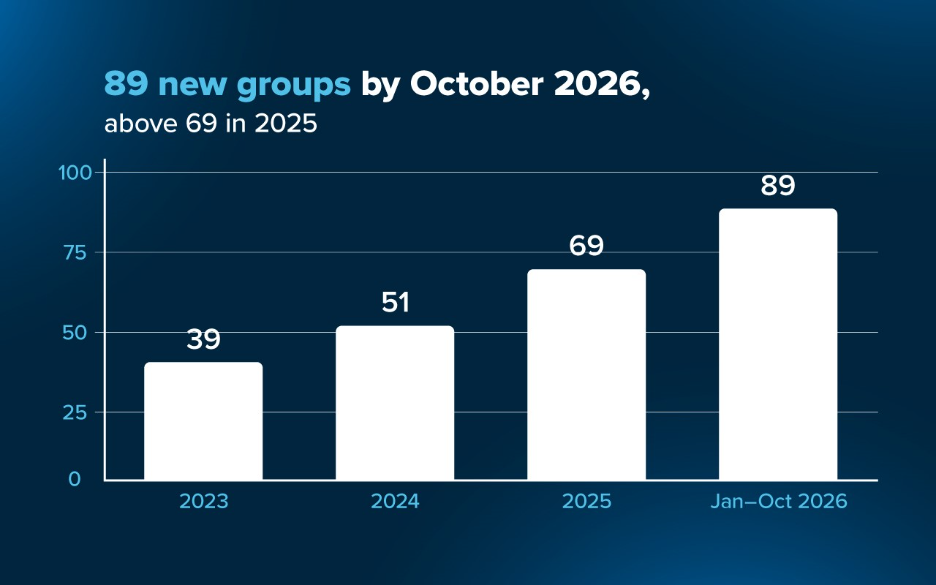
The ransomware landscape is changing, and one of the most concerning developments isn't just the number of attacks. It's the rapid emergence of new ransomware groups.
In the last 30 days alone, more than 10 new ransomware group identities have emerged, highlighting how quickly the cybercriminal ecosystem is evolving.
According to Ransomware.live, the number of newly observed ransomware groups has increased by 29% in 2026, with 89 new group identities recorded so far, compared to 69 throughout 2025.
These figures reflect publicly reported activity and may change as new groups and victim claims emerge. Some incidents remain undisclosed, while other claims may be exaggerated or unverified.
Why are so many new ransomware groups emerging in such a short period, and who is behind them?
Are experienced cybercriminals breaking away from established ransomware operations? Is Ransomware-as-a-Service making it easier for new groups to enter the ecosystem? Or could economic pressures, including technology-sector layoffs, be contributing to the rise of new operators?
While the reasons behind this increase remain unclear, understanding what's driving the emergence of new ransomware groups is becoming increasingly important for defenders.
A changing cybersecurity job market
The rise in newly observed ransomware groups comes at a time when the cybersecurity job market is experiencing a significant shift.
According to CyberSN's 2026 cybersecurity jobs report:
- 235,786 cybersecurity job postings were recorded in the United States between January and September 2026, a 26.4% decrease from 320,210 during the same period in 2025.
At the same time, demand for AI security engineers reportedly increased by 268.3%, while penetration-testing job postings declined by 45.9%.
This raises an interesting question: Could the decline in traditional cybersecurity job opportunities be influencing cybercriminal recruitment?
Who's recruiting cybersecurity talent?
Cybersecurity companies aren't the only ones looking for skilled professionals. One example is WhiteArmor, a ransomware group that emerged in October 2026. In an underground forum post, the group advertised for a penetration tester, specifically individuals with offensive cybersecurity expertise.
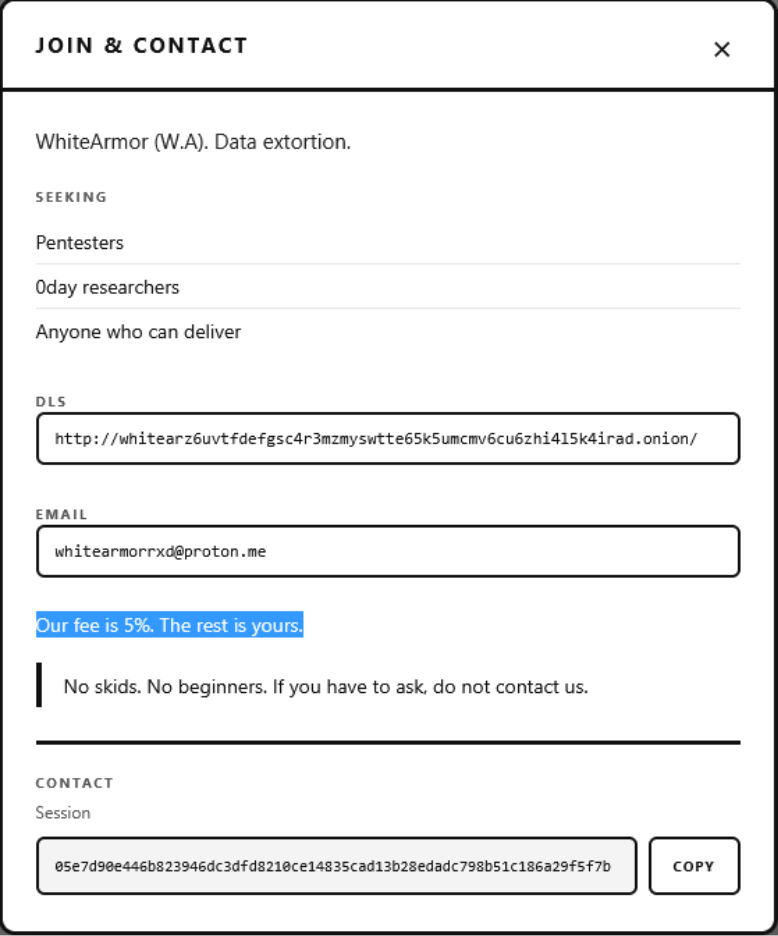
WhiteArmor's recruitment efforts highlight how criminal organizations seek specialized cybersecurity skills. However, there is no confirmed evidence connecting its recruitment activity to layoffs or unemployment.
Emerging ransomware groups: Geographic and industry breakdown
Beyond recruitment, these emerging ransomware groups have claimed victims across multiple countries and industries. The following breakdown highlights their geographic reach and industry distribution, based on publicly reported victim claims tracked by Ransomware.live.
Are these really new ransomware groups?
Not every newly observed ransomware group represents a new criminal organization. Some may be experienced operators breaking away from established groups, rebranding to avoid scrutiny, or reorganizing following law enforcement disruptions.
Ransomware-as-a-Service (RaaS) also lowers the barriers to entry, allowing individuals to participate in ransomware operations without developing their own tools or infrastructure. Cybercrime has evolved into a business ecosystem built around specialized services, criminal marketplaces, and affiliate networks.
What does this mean for cybersecurity?
While some of the reasons behind the rapid emergence of new ransomware groups remain unclear, RaaS and AI are lowering the barriers to entry, making it easier for individuals to develop tools, automate tasks, and launch ransomware operations without extensive technical expertise.
Some may represent established operators reorganizing under new identities, while others could involve new participants entering the cybercriminal ecosystem.
For organizations, this reinforces the importance of focusing on attacker behavior rather than relying solely on known malware or ransomware groups. Controls that restrict unauthorized application execution, enforce least privilege, and limit lateral movement can help reduce ransomware exposure regardless of which group is responsible.
The names may be new, but the underlying risks remain familiar.

ABOUT THE AUTHOR
Kenneth spent 10 years as a digital creator, developing a strong foundation in digital storytelling and technology before earning his degree in Cyber Operations. His creative background shaped his ability to think outside the box, recognize patterns, approach complex problems from different perspectives, and explore unconventional solutions. He began his cybersecurity career as a Security Analyst, earning Lv. 2 status before transitioning into Threat Intel research. He believes creativity and analytical thinking go hand in hand in cybersecurity, where curiosity, research, and the ability to think like an adversary can provide valuable insight into identifying and understanding emerging threats.