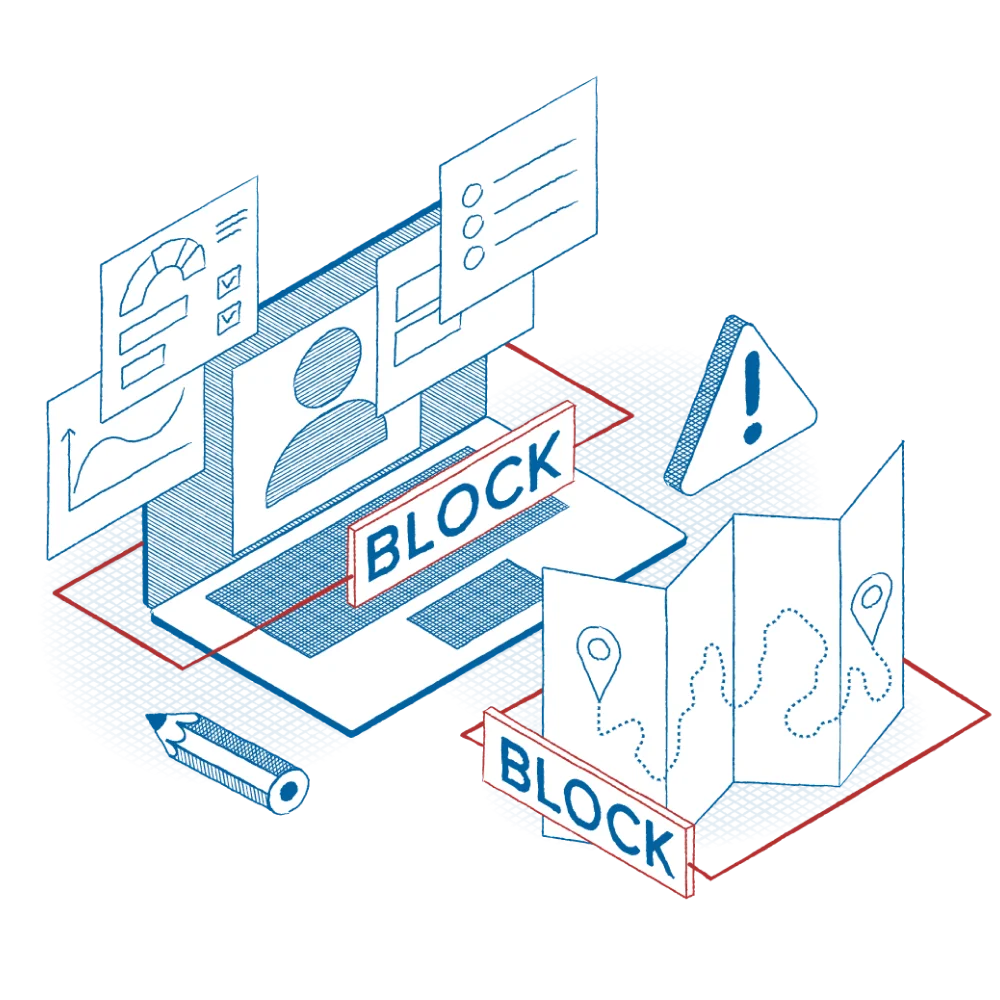
Once inside, attackers pivot. They move east-west across the network searching for privileged systems, backup servers, and high-value data. They use living-off-the-land tools, stolen tokens, RDP, and PowerShell to blend in and move inside your environment. Containing lateral movement is critical. It’s time to remove implicit trust. Enforce explicit permission between systems, control how applications interact, which devices connect, and restrict administrative pathways by policy, so no trusted tools are launched without explicit permissions.
When you precisely define what’s allowed, you break the paths attackers rely on.
How it applies across your environment
Endpoints
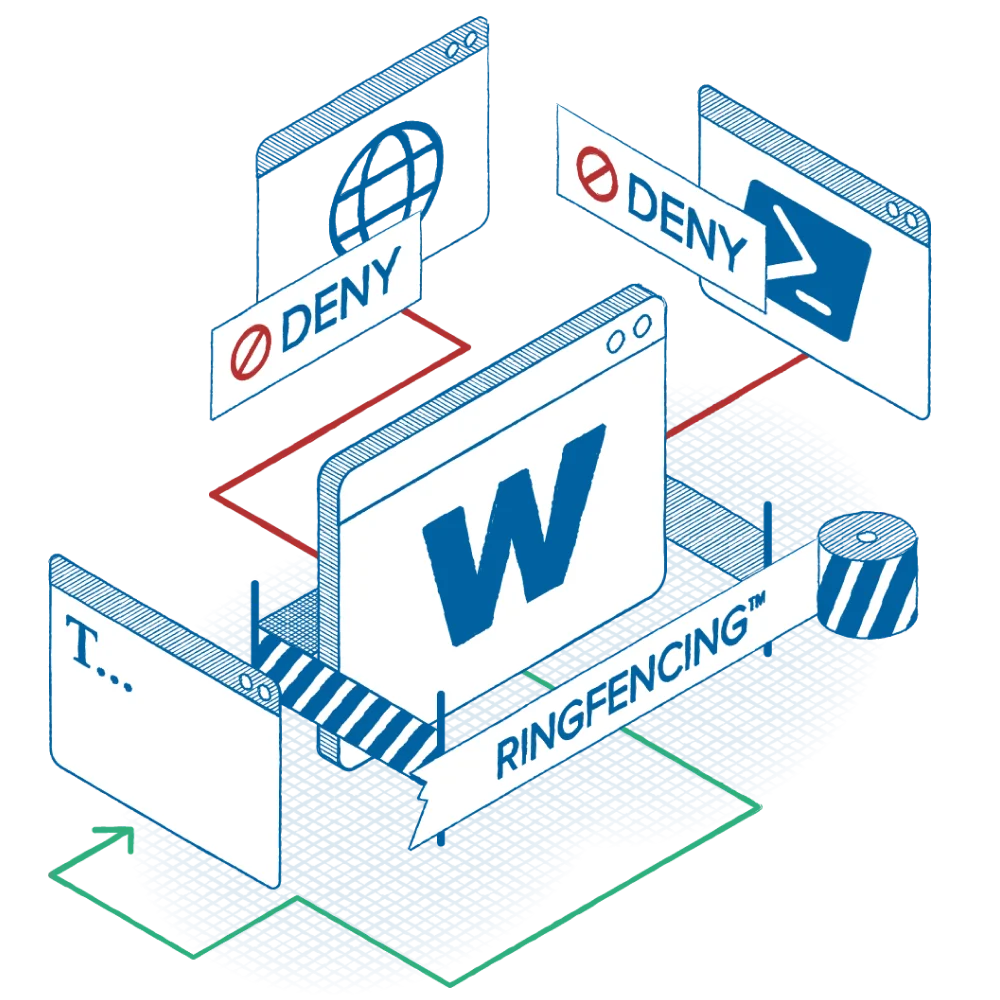
Prevent trusted apps from launching other tools without your explicit permission. For example, stop a PDF reader or Office document from spawning PowerShell, command-line tools, or other system utilities in the background.
Restrict what approved software can access (files, registry, processes, network).
Limit privileged actions to approved tools and contexts.
End lateral movement by ending implicit trust.
Once we have a clean machine, I install ThreatLocker first. The agent lets me elevate privileges without entering a password repeatedly during setup, and it kicks off that endpoint’s audit trail from day one.
Jack Harbut IT and Systems Manager Stampede Meats
Cloud
Stop stolen credentials from being used to access your cloud resources.
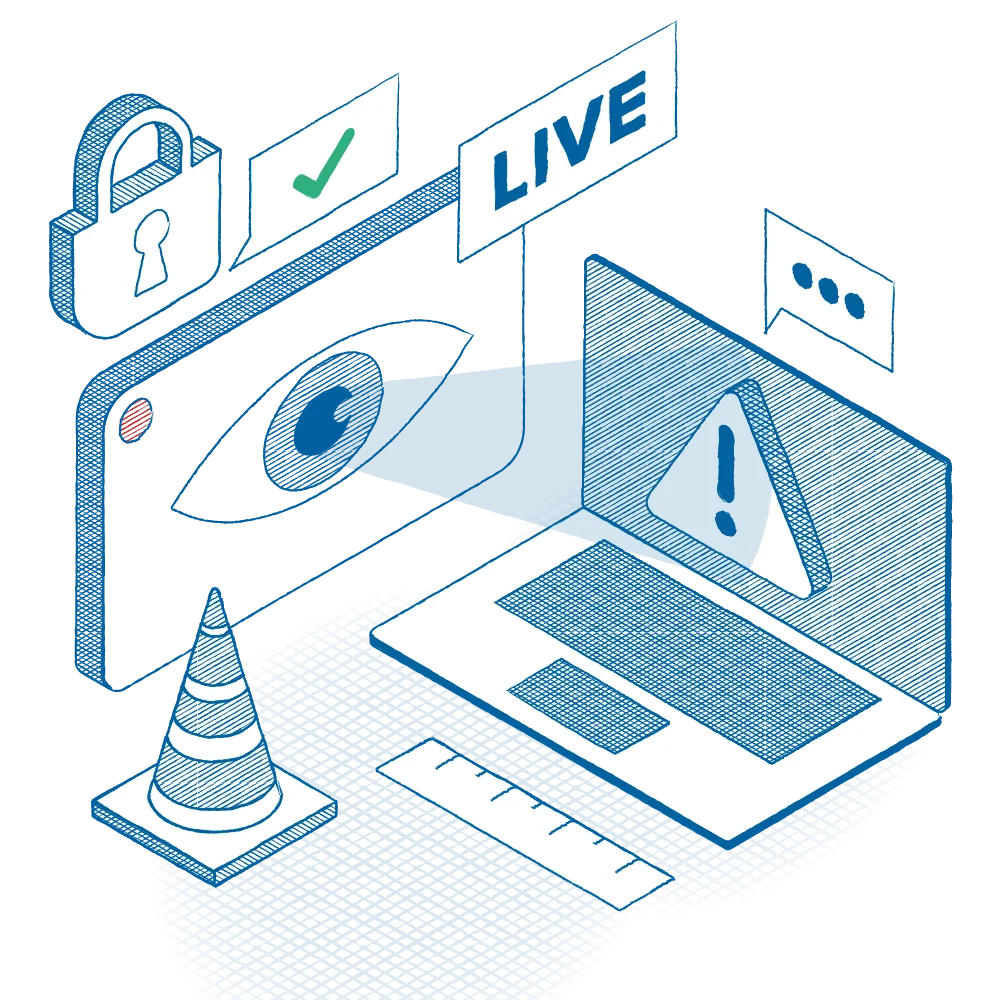
Act in real time when suspicious activity happens and isolate accounts.
Use micro-segmentation to create fewer pathways for attackers to move.
Apply ThreatLocker policy-based containment to high-risk, high-privilege applications, so even if they are compromised, their ability to move, communicate, or modify critical systems is sharply limited.
Enforce device-level validation across your network so only explicitly approved devices can communicate. Untrusted endpoints cannot connect to trusted systems, and trusted devices are restricted to only the specific actions and pathways defined by policy.
Lock down management access and remote admin routes.
Permit connections dynamically for known devices only, and make your network invisible to rogue internet traffic.
.svg)



.svg)