

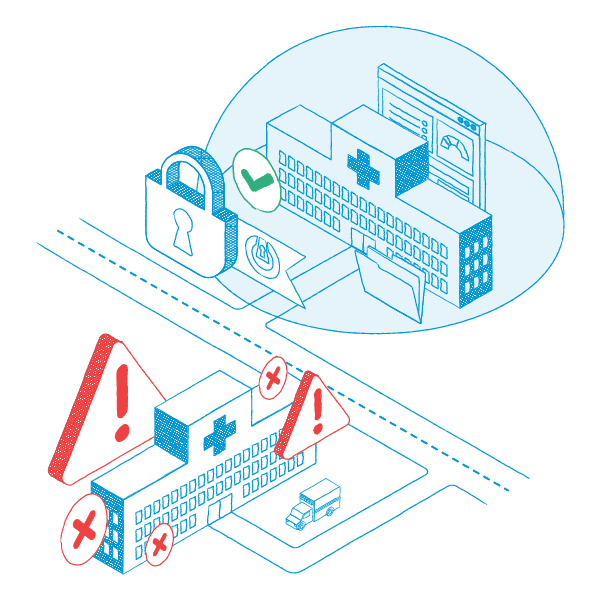
ThreatLocker helps you define what applications, AI-driven workflows, and connected systems are allowed to access, communicate with, and transfer sensitive data before information leaves your environment or creates patient risk.
.svg)
Having a piece of software that prevents any unauthorized application from running seemed like the best solution one could ask for.
Before ThreatLocker, we had a lot of risk that we simply couldn’tcontrol. With ThreatLocker, we’re doing a much better job of providing a secure environment for our patients, our doctors, and our manufacturing partners.

Block ransomware, unauthorized applications, and unknown executables from running across endpoints, servers, and clinical systems by ensuring only approved software canexecute.

Control how applications interact with files, systems, and networks tocontainlateral movement and prevent unauthorized communication across connected healthcare environments.

Prevent attackers fromleveragingstolen credentials by granting secure access to healthcare systems only from explicitly authorized users and devices.

Protect access to healthcare platforms, SaaS applications, and cloud environments bytyingaccess toa secure broker instead of relying solely on credentials, MFA approvals, or tokens.
Restrict unnecessary communications across endpoints, servers, and connected medical systems to reduce exposure and prevent unauthorized traffic from reaching critical healthcare infrastructure.
Protect sensitive patient data by enforcing precise access policies across local systems, shared drives, cloud storage, and connected healthcare platforms.
Prevent unauthorized USB devices and removable media from introducing malware or extracting sensitive healthcare data from your environment.
Gain real-time visibility into suspicious activity and isolate compromised systemsimmediatelyto help minimize operational disruption and protect patient care.
Reduce the risks associated with over-permissioned accounts and credential abuse by enforcing least privilege and granting permissions to applications instead of users.
Identify risky configurations, visibility gaps, and insecure settings across healthcare systems with actionable recommendations that help strengthen your environment.
Extend your security operations with expert-led threat monitoring and response backed by 24/7/365 Cyber Hero® support that validates and acts on alerts within minutes.
Automatically identify vulnerable applications and deploy patches across healthcare systems without increasing operational workload for IT teams.
Block malicious websites, phishing attempts, and risky web activity before users can interact with harmful content or expose sensitive data.
Control how AI tools, integrations, and automated workflows interact with sensitive systems and patient data by defining allowed versus unauthorized behavior across your environment.
Apply compensating controls across legacy systems and connected medical devices that cannot easily be patched or replaced by restricting execution, communication, and unnecessary exposure.
